Makmur Program: Pupuk Indonesia’s Way of Supporting Farmers' Prosperity
-
 Posted by
- Share


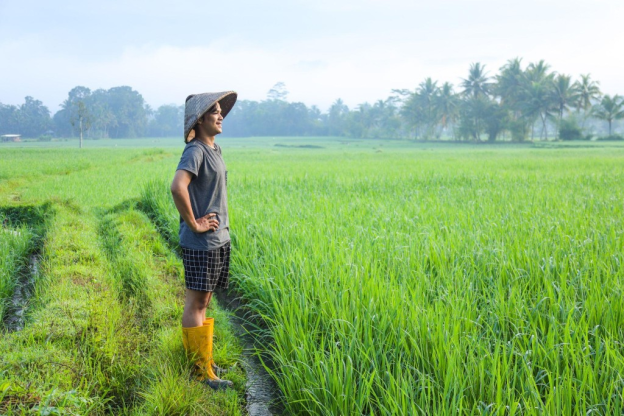
Farmers are the frontline defenders in safeguarding national food security. Without them, the availability of essential food staples such as rice, corn, and vegetables would be disrupted, which would, in turn, affect social and economic stability. Amidst global challenges—from climate change to geopolitical tensions—the role of farmers becomes increasingly strategic as the primary providers of domestic food supply.
However, behind this strategic role, Indonesian farmers face various obstacles that hinder their productivity and overall welfare. These challenges require attention and proper solutions to ensure that national agriculture can develop sustainably and meet the future food demands.
Challenges Faced by Indonesian Farmers
Farmers are grappling with multiple challenges that impede productivity and wellbeing, including:
1. Non-Precision Fertilization
Many farmers still apply fertilizers without accurate analysis of soil needs, resulting in suboptimal yields and increased production costs. Overuse of fertilizers also risks damaging soil fertility.
2. Crisis in Farmer Regeneration
Interest among younger generations in pursuing farming continues to decline, as agriculture is often perceived as unpromising. In fact, with the use of modern technology and approaches, farming can become a profitable business opportunity.
3. Conversion of Agricultural Land
Productive farmland is increasingly shrinking due to conversion into housing or industrial areas, posing a threat to the sustainability of national food production.
4. Climate Change
Weather anomalies caused by El Niño and La Niña disturb planting seasons and reduce productivity.
5. Limited Access to Capital
Small-scale farmers struggle to access capital for high-quality seeds, non-subsidized fertilizers, and modern equipment due to a lack of collateral and land legality.
6. Traditional Cultivation Methods
Many farmers have not adopted modern agricultural technologies, resulting in stagnant yields and limited competitiveness.
In response to these various challenges, Pupuk Indonesia has demonstrated a strong commitment to support farmers in overcoming these barriers. Through the Makmur Program, Pupuk Indonesia aims to provide integrated solutions that not only boost productivity but also drive the transformation of agriculture towards a more modern, efficient, and sustainable system.
Makmur Program: Integrated Support for Modern Farmers
The Makmur Program (an acronym for “Mari Kita Majukan Usaha Rakyat”, or “Let’s Advance the People’s Efforts”) is Pupuk Indonesia’s initiative designed to provide holistic support for farmers. By the end of 2024, the program had engaged more than 170,000 farmers, covering over 451,000 hectares of land. It encompasses various strategic commodities such as rice, sugarcane, corn, oil palm, and coffee.
The success of the Makmur Program stems from solid multi-stakeholder collaboration, including banks, insurance providers, offtakers, local governments, and relevant business partners. This collaboration ensures comprehensive support for farmers, not only in fertilizer and technology provision, but also in financial access and market integration.
The program has significantly improved rice productivity—from an average yield of 5.7 tons per hectare to 8 tons per hectare. This increase in productivity has positively impacted farmers' income, raising profits from around IDR 15 million per hectare to IDR 24 million per hectare. These results demonstrate how integrated support and field assistance can transform agriculture into a modern, efficient, and profitable sector.
Structured Implementation with Stakeholder Involvement
The implementation of the Makmur Program follows a structured approach involving all relevant stakeholders—from farmers and agricultural extension workers to business partners. The program not only focuses on the provision of fertilizers and technology but also emphasizes ongoing coaching to help farmers maximize their land and resource potential.
Agricultural extension workers play a vital role in the program’s success. They provide technical knowledge on precision fertilization and modern farming techniques, while also accompanying farmers directly in the field. Through intensive guidance, farmers are able to adopt new practices that enhance productivity and preserve land sustainability. Furthermore, extension workers also help build awareness among farmers about effective farm business management and adaptation to climate change.
Hope for Indonesian Farmers
Pupuk Indonesia recognizes the high enthusiasm of farmers across the country in developing the agricultural sector. However, challenges still remain—particularly in ensuring continuous access to high-quality fertilizers. Through improved distribution systems, education on balanced fertilization, and support for government programs, Pupuk Indonesia aims to help increase agricultural productivity. In doing so, farmers can become more self-reliant and capable of accessing commercial fertilizers tailored to their specific land needs.