Coordinating Minister Zulhas Confirms Smooth Distribution of Subsidized Fertilizers in Banyuwangi, Farmers’ Welfare Improves
-
 Posted by User01
- Share


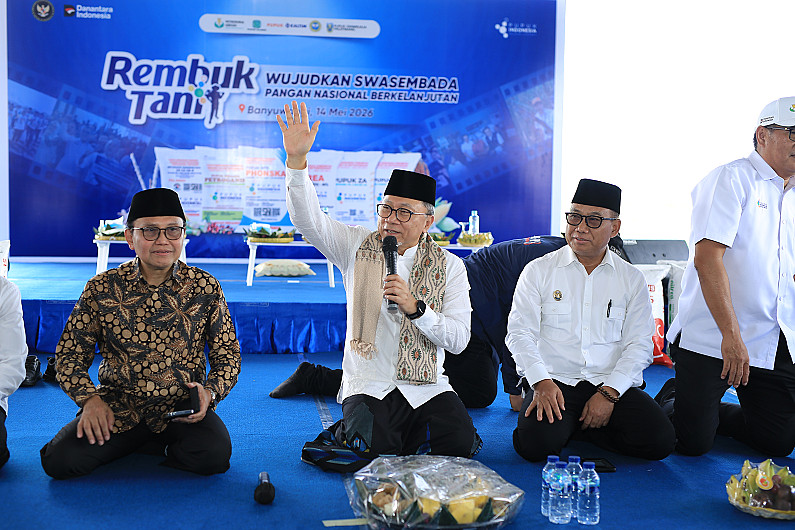
Banyuwangi, May 14, 2026 – Indonesia’s Coordinating Minister for Food Affairs, Zulkifli Hasan (Zulhas), confirmed that the distribution of subsidized fertilizers in Banyuwangi, East Java, has been running smoothly. The condition was directly observed during a Rembuk Tani (Farmers’ Dialogue Forum) held in Karangbendo Village, Rogojampi District, Banyuwangi Regency, on Thursday (May 14, 2026).
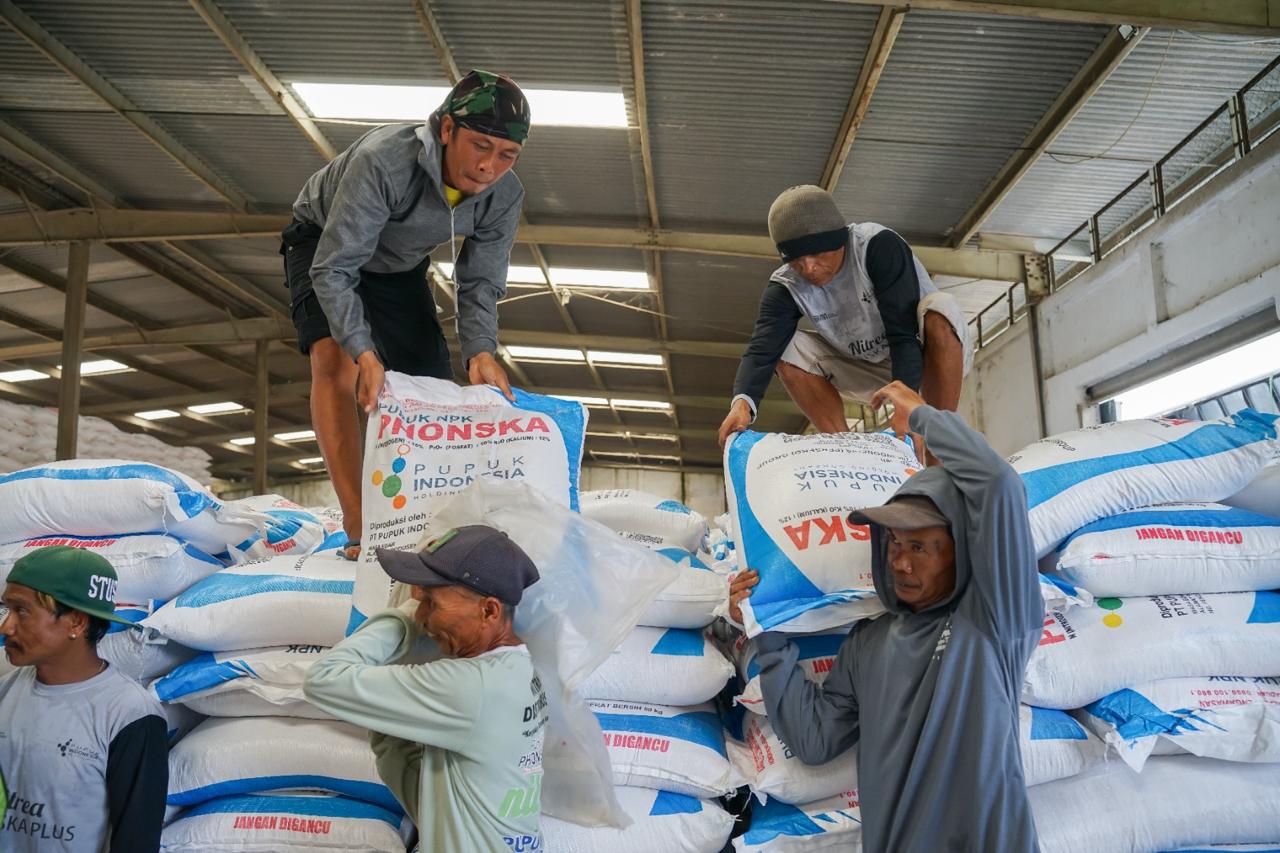
During the event, Minister Zulhas stated that he had received direct instructions from President Prabowo Subianto to ensure that subsidized fertilizer distribution was functioning effectively on the ground. Based on his observations, fertilizer distribution has been running smoothly and delivering tangible benefits to farmers.
“The President asked me to check on fertilizer distribution. Thank God, fertilizer supplies are running smoothly, and prices have also been reduced by 20 percent,” Zulhas told reporters.
The field visit was conducted to review the implementation of the Government’s new policies on subsidized fertilizer distribution governance. These include the simplification of regulations from 145 separate rules into a single umbrella regulation through Presidential Regulation (Perpres) No. 6 of 2025 on Subsidized Fertilizer Governance, which was subsequently refined through Presidential Regulation No. 113 of 2025. In addition, Minister of Agriculture Regulation (Permentan) No. 15 of 2025 was issued to provide implementing guidelines.
As a result of these reforms, subsidized fertilizers can now be redeemed at the beginning of the year, allowing farmers to obtain fertilizers before the planting season starts. This improvement has contributed to higher agricultural productivity.
Another major policy reform introduced by the Government was the reduction of the Highest Retail Price (HET) of subsidized fertilizers by 20 percent since October 2025. This marked the first reduction in subsidized fertilizer prices in the history of Indonesia’s fertilizer subsidy program and applies to all types of subsidized fertilizers.
According to Zulhas, the smooth distribution system and more affordable fertilizer prices have positively impacted farmers’ welfare, as reflected in the increase of the national Farmers’ Terms of Trade (NTP).
“The Farmers’ Terms of Trade have increased. Last year the figure stood at 116, and now it has risen to 125. This means our farmers are becoming more prosperous,” he said.
Zulhas emphasized that the Government remains committed to ensuring the availability of subsidized fertilizers, strengthening the national food sector, and providing farmers with easy and affordable access to agricultural inputs. The Farmers’ Dialogue Forum in Banyuwangi also served as a platform for direct engagement between the Government and farmers to gather feedback and ensure that food-sector programs are being implemented effectively at the regional level.
At the same event, Daconi Khotob, President Director of Petrokimia Gresik, a member of the Pupuk Indonesia Group, expressed appreciation for the Government’s support in enabling Pupuk Indonesia and its subsidiaries to distribute subsidized fertilizers more efficiently. According to him, the various measures introduced by the Government have helped optimize farmers’ uptake of subsidized fertilizers.
Specifically for East Java Province, the Government has allocated 2,038,387 tons of subsidized fertilizers in 2026, consisting of 1,005,145 tons of Urea, 884,868 tons of NPK Phonska,
255 tons of NPK Cocoa Special Formula, 114,309 tons of Petroganik organic fertilizer, 10,987 tons of ZA fertilizer, and 22,823 tons of SP-36 fertilizer.
For Banyuwangi Regency, the Government has allocated 90,096 tons of subsidized fertilizers in 2026, comprising of 47,401 tons of Urea, 42,035 tons of NPK Phonska, 652 tons of Petroganik organic fertilizer, and 7 tons of ZA fertilizer.
Meanwhile, fertilizer redemption by farmers in East Java during the early part of the year has been relatively high, reaching 866,215 tons. As of May 12, 2026, distribution realization had reached approximately 42.5 percent of the total allocation.
An even higher uptake rate was recorded in Banyuwangi, where farmers had redeemed 51.8 percent of the allocated subsidized fertilizers during the same period, equivalent to approximately 46,685 tons.
“Fertilizer uptake during the early part of this year has been quite high. This is inseparable from the various improvements introduced by the Government through reforms in subsidized fertilizer distribution governance,” Daconi said.
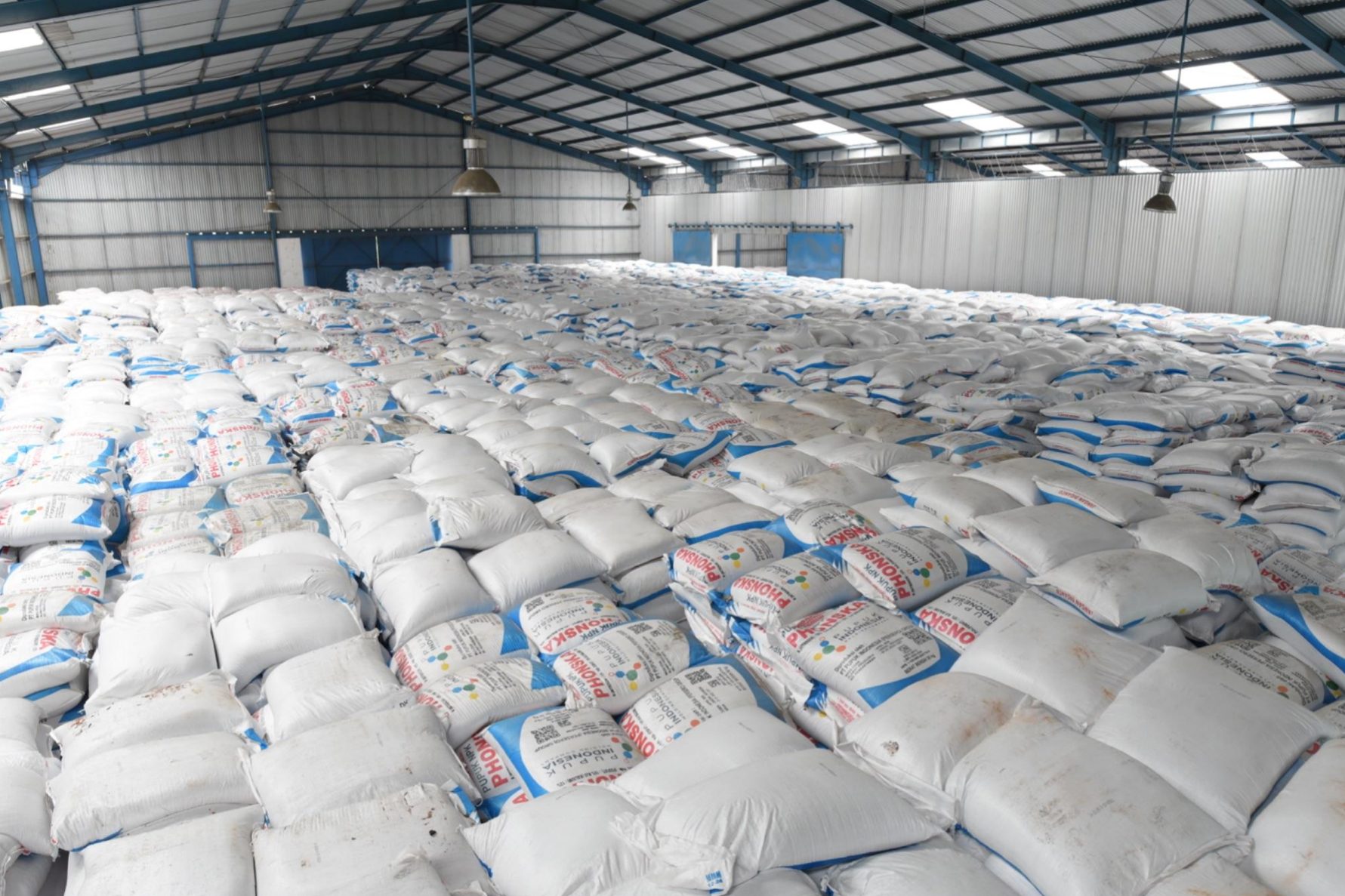
To support higher fertilizer uptake, Pupuk Indonesia has prepared 147,643 tons of subsidized fertilizer stocks in East Java. As of May 13, 2026, the inventory consisted of 88,273 tons of Urea, 27,691 tons of NPK Phonska, 318 tons of NPK Cocoa Special Formula, 11,609 tons of organic fertilizer, 2,778 tons of ZA fertilizer, and 16,973 tons of SP-36 fertilizer. Current subsidized fertilizer stocks in Banyuwangi amount to 3,357 tons, consisting of 2,224 tons of Urea, 1,108 tons of NPK Phonska, 22 tons of NPK Cocoa Special Formula, and
3 tons of ZA fertilizer.
Meanwhile, the smooth distribution of subsidized fertilizers was also confirmed directly by Muhammad Saidi, a farmer from Banyuwangi who attended the Farmers’ Dialogue Forum. He stated that farmers in Banyuwangi currently have no complaints regarding the availability of subsidized fertilizers.
“Everything is running smoothly. In the past, farmers often complained because fertilizers were unavailable when needed. Now, everything is running well,” Saidi said.