Rembuk Tani Pupuk Indonesia, Food Coordinating Minister Zulkifli Hasan: Fertilizers Ready, Farmers Happy
-
 Posted by User01
- Share


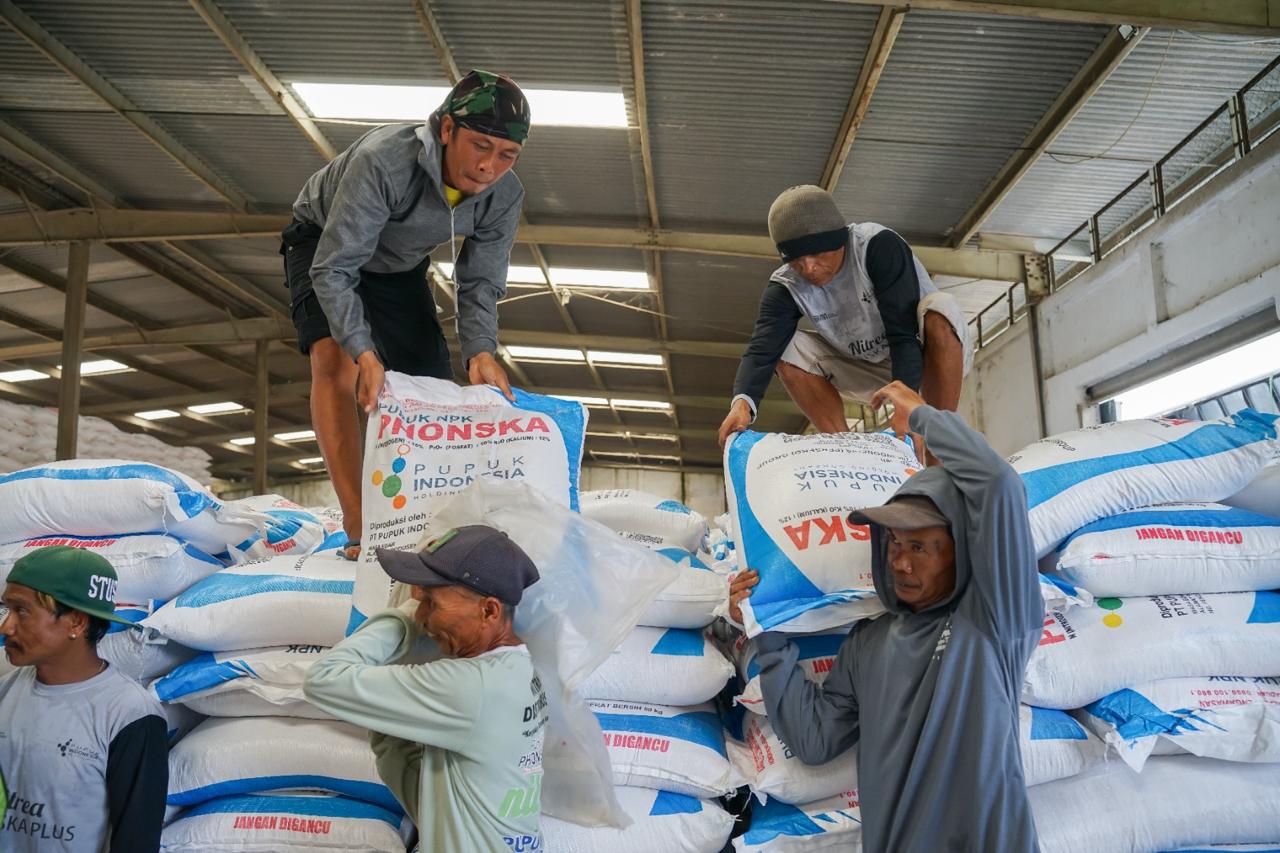
Aceh Besar, June 13, 2026 – The distribution of subsidized fertilizers in Aceh Province has been running smoothly and has delivered positive impacts on the agricultural sector. The smooth distribution process has increased farmers’ optimism, as it supports higher agricultural productivity.
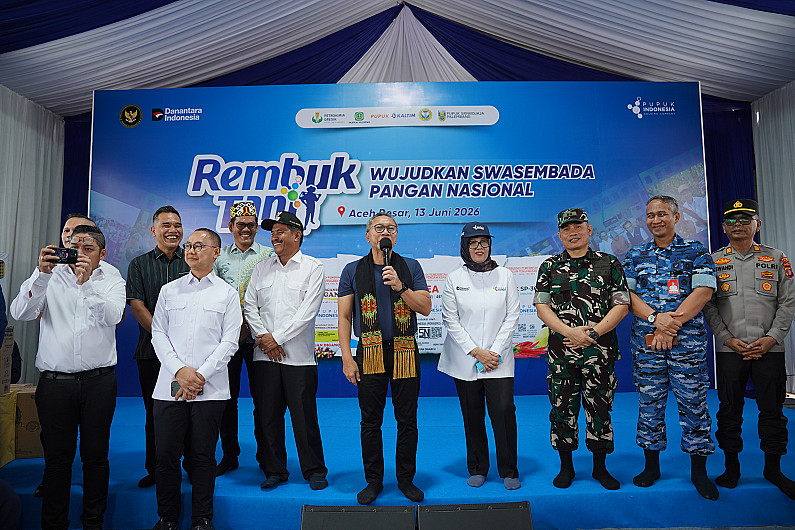
“Thank God, farmers are happy, fertilizer distribution is running smoothly, and our production is increasing,” said Coordinating Minister for Food Affairs, Zulkifli Hasan, commonly known as Menko Zulhas, during the “Pupuk Indonesia Farmers’ Dialogue (Rembuk Tani)” event in Aceh Besar Regency on Saturday (June 13, 2026).
According to him, the success of Aceh’s agricultural sector today cannot be separated from the government’s swift actions in restoring and rehabilitating agricultural land affected by floods and landslides in several areas of Sumatra, including Aceh. As a result of these efforts, agricultural land has become productive once again and is capable of generating strong harvests.
Minister Zulhas emphasized that, following the rehabilitation efforts, adequate fertilizer availability has become one of the key factors in maintaining and increasing food productivity in Aceh. Therefore, the President has issued specific directives to ensure that fertilizer distribution in the field does not experience delays.
Furthermore, he encouraged farmers to make the most of the improvements in subsidized fertilizer governance implemented by the government. Various policy simplifications have been introduced, making farmers’ access to subsidized fertilizers easier and faster.
“We must make the best possible use of this momentum of smooth subsidized fertilizer distribution to improve the welfare of our farmers,” he stressed.
Meanwhile, one clear example of the government’s support for farmers is the reduction of the Highest Retail Price (HET) of subsidized fertilizers by up to 20 percent. This policy was made possible by improved efficiency within PT Pupuk Indonesia, which has even enabled the company to build new fertilizer plants without increasing the subsidy budget.
“The reduction in HET was made possible through the transition from a cost-plus subsidy scheme to a mark-to-market mechanism. This was achieved with the support of Pupuk Indonesia,” Minister Zulhas explained.
With smoother fertilizer distribution, more affordable prices, and continued government support for the agricultural sector, it is expected that national agricultural productivity will continue to increase and that farmers’ welfare will improve further.
At the same event, Risk Management Director of Pupuk Indonesia, Ninis K Adriani, expressed appreciation for the government’s support in enabling Pupuk Indonesia to distribute subsidized fertilizers more efficiently. According to her, the various conveniences provided by the government have resulted in more optimal fertilizer absorption.
As of June 11, 2026, Pupuk Indonesia had distributed 4,374,633 tons of subsidized fertilizers nationwide, equivalent to 44.4 percent of the total 2026 allocation. The distribution consisted of 1,984,755 tons of Urea, 2,213,848 tons of NPK, 35,637 tons of NPK Cocoa, 3,757 tons of SP-36, 5,744 tons of ZA, and 130,892 tons of organic fertilizer.
Specifically in Aceh Besar, Pupuk Indonesia had distributed 9,361 tons, or 42 percent of the total 2026 allocation of 22,472 tons. The distribution consisted of 4,518 tons of Urea, 4,772 tons of NPK, and 71 tons of organic fertilizer.
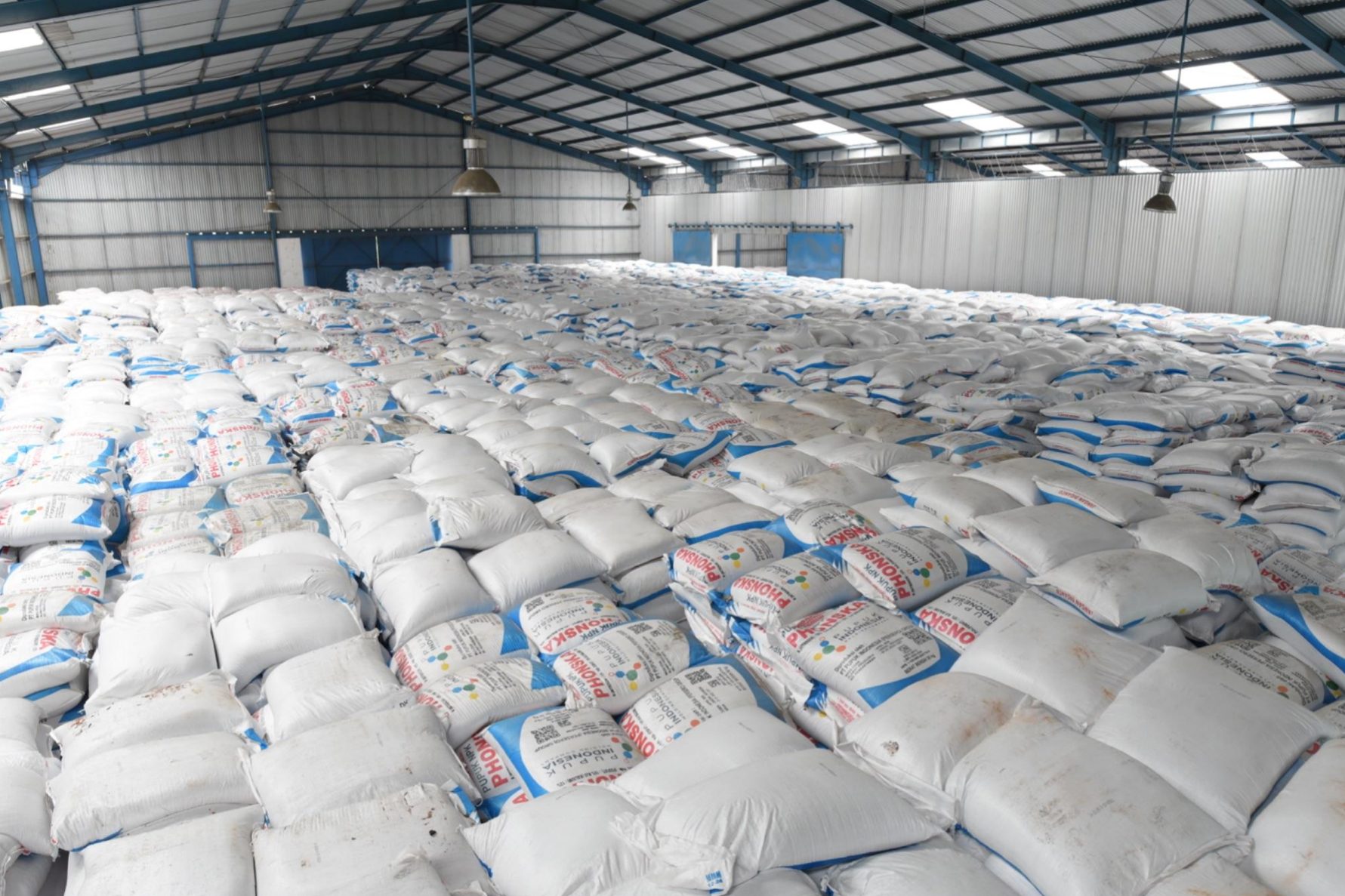
To support more optimal fertilizer absorption, Pupuk Indonesia has also prepared a national subsidized fertilizer stock of 831,297 tons as of June 12, 2026. The stock consists of 526,726 tons of Urea, 231,452 tons of NPK, 10,309 tons of NPK Cocoa, 17,762 tons of SP-36, 3,096 tons of ZA, and 41,953 tons of organic fertilizer.
Meanwhile, subsidized fertilizer stocks in Aceh Besar currently stand at 776 tons, consisting of 157 tons of Urea, 609 tons of NPK, and 10 tons of organic fertilizer. (Note: the source text appears to contain a discrepancy, as it first states 9,361 tons and then provides a breakdown totaling 776 tons. The translated figures above follow the numerical breakdown provided.)