Pupuk Indonesia Can Increase Rice Productivity in Kulon Progo Through Balanced Fertilization
-
 Posted by User01
- Share



Kulon Progo, June 17, 2026 – PT Pupuk Indonesia (Persero) continues to encourage farmers across various regions to implement balanced fertilization practices. This method has proven capable of achieving productivity of 8 tons per hectare on rice fields in Nanggulan District, Kulon Progo Regency, Special Region of Yogyakarta.
Regional CEO of Pupuk Indonesia Regional 2, Muhammad Ihwan F, stated that the harvest results serve as evidence that balanced fertilization using Pupuk Indonesia products can directly improve productivity and demonstrate that the quality of these products remains well maintained.
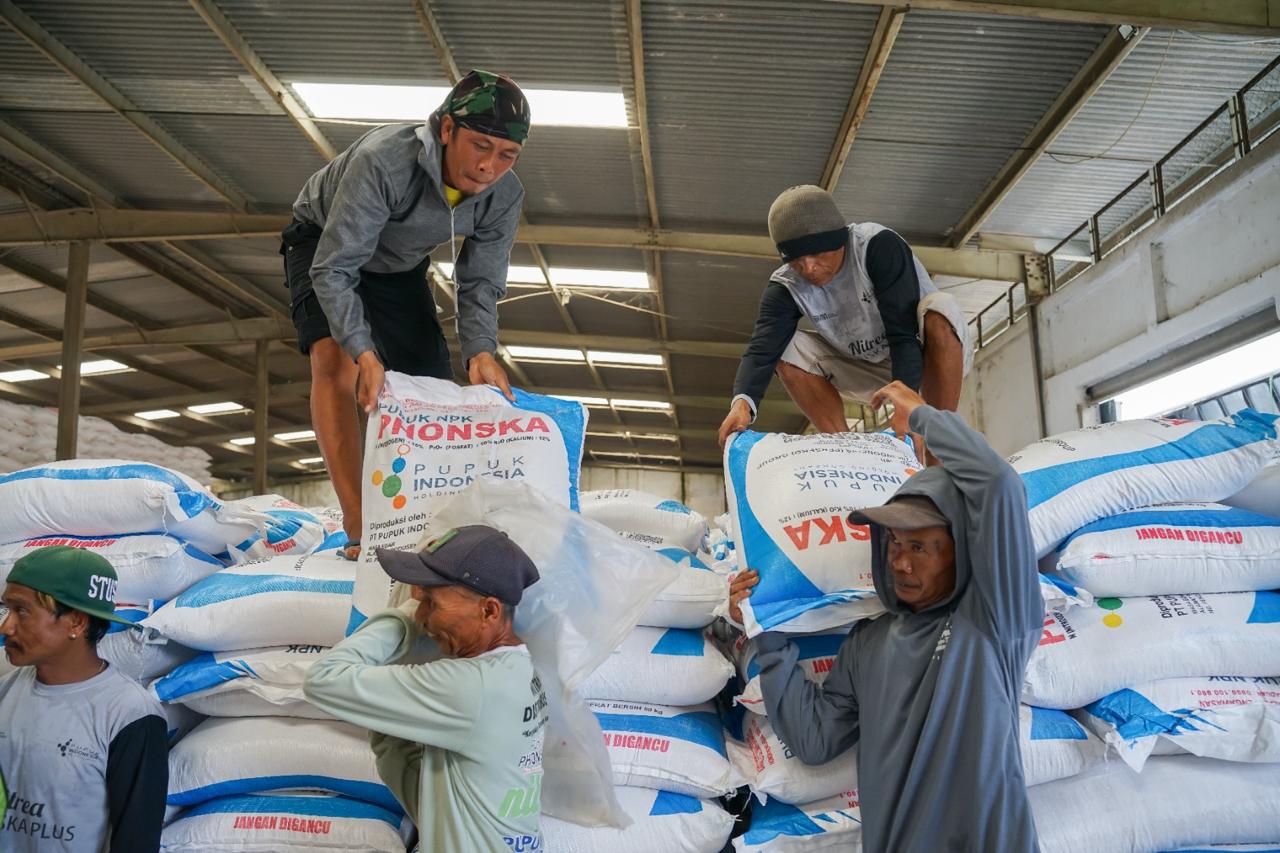
“We aim to provide education while also demonstrating directly to farmers the importance of balanced fertilization. In this activity, a balanced fertilization demonstration plot was implemented using 500 kg of Petroganik, 300 kg/ha of Phonska, and 200 kg/ha of Urea,” said Ihwan.
Based on crop-cutting test results (ubinan), Ihwan explained that the demonstration plot applying the balanced fertilization method achieved productivity of 8.288 tons per hectare. He further noted that these results indicate that balanced fertilization can deliver optimal yields while improving fertilizer-use efficiency.
The productivity achieved under the treatment was at a very favorable level and demonstrates that proper fertilizer recommendations can support maximum crop growth.
According to Ihwan, the increase in rice productivity on the demonstration plot provides evidence that the use of high-quality fertilizers, combined with recommended application rates, can produce high and sustainable yields.
“The results of this trial provide farmers with confidence that balanced fertilization contributes to increased rice productivity,” Ihwan explained.
Going forward, Ihwan stated that Pupuk Indonesia will continue to promote balanced fertilization trials and provide assistance to farmers in order to expand understanding of proper fertilization practices based on crop requirements and land conditions.
These efforts are expected to support increased national agricultural productivity while contributing to sustainable food security.
According to him, the results achieved from the demonstration plot in Nanggulan District provide farmers with a clear illustration that the implementation of cultivation technology and balanced fertilization is one of the keys to achieving high, efficient, and sustainable harvest yields.