Pupuk Indonesia Ensures Adequate Subsidized Fertilizer Stocks While Promoting Balanced Fertilization Among Farmers in East Java
-
 Posted by User01
- Share


Lamongan, July 1, 2026** – PT Pupuk Indonesia (Persero) has ensured that subsidized fertilizer stocks in East Java remain sufficient, with current availability reaching 142,711 tons. At the same time, the company continues to educate farmers on implementing balanced fertilization in accordance with the Government’s recommendations to improve productivity efficiently and support sustainable agriculture.
Regional CEO 3 of Pupuk Indonesia, Eko Suroso, speaking during the “Regional 3 Media Gathering” in Lamongan, East Java, on Wednesday (July 1, 2026), stated that East Java has received the largest subsidized fertilizer allocation in Indonesia for 2026, totaling 2,038,387 tons. Nevertheless, fertilizer application must follow the dosage recommended by the Government to maximize its benefits.
“East Java serves as the benchmark for Indonesia’s agricultural sector. About ten years ago, there were still farmers in East Java applying as much as 1,000 kilograms of Urea per hectare. This practice is harmful—not only because it significantly increases production costs, but also because it damages soil quality,” said Eko.
Based on the Government’s recommendations, balanced fertilization for rice cultivation generally follows a 5:3:2 ratio, consisting of 500 kilograms of organic fertilizer, 300 kilograms of NPK fertilizer, and 200 kilograms of Urea per hectare.
To support precision fertilization, Pupuk Indonesia has also deployed Mobile Soil Testing Units, enabling farmers to obtain balanced or precision fertilization recommendations based on the specific needs of their crops and soil conditions. This service also serves as part of the company’s education and farmer assistance programs in support of the Government’s national food self-sufficiency agenda.
The company hopes farmers will no longer apply fertilizers solely based on past experience, but rather according to crop requirements. This will ensure that the Government’s subsidized fertilizer allocation is utilized more efficiently and appropriately.
“For example, most agricultural land in Lamongan has alkaline soil conditions. Therefore, organic fertilizer is needed to improve and enhance soil quality in these farming areas,” Eko explained.
The 2026 subsidized fertilizer allocation for East Java consists of 1,005,145 tons of Urea, 884,868 tons of NPK Phonska, 225 tons of NPK Cocoa, 114,309 tons of organic fertilizer, 10,987 tons of ZA, and 22,823 tons of SP-36. To date, approximately 56 percent of the allocation, or around 1,146,561 tons, has already been distributed.
“This high level of fertilizer uptake is inseparable from the various improvements introduced by the Government. Over the past two years, subsidized fertilizer distribution governance has undergone significant transformation, ranging from regulatory simplification to the reduction of the Highest Retail Price (HET),” Eko explained.
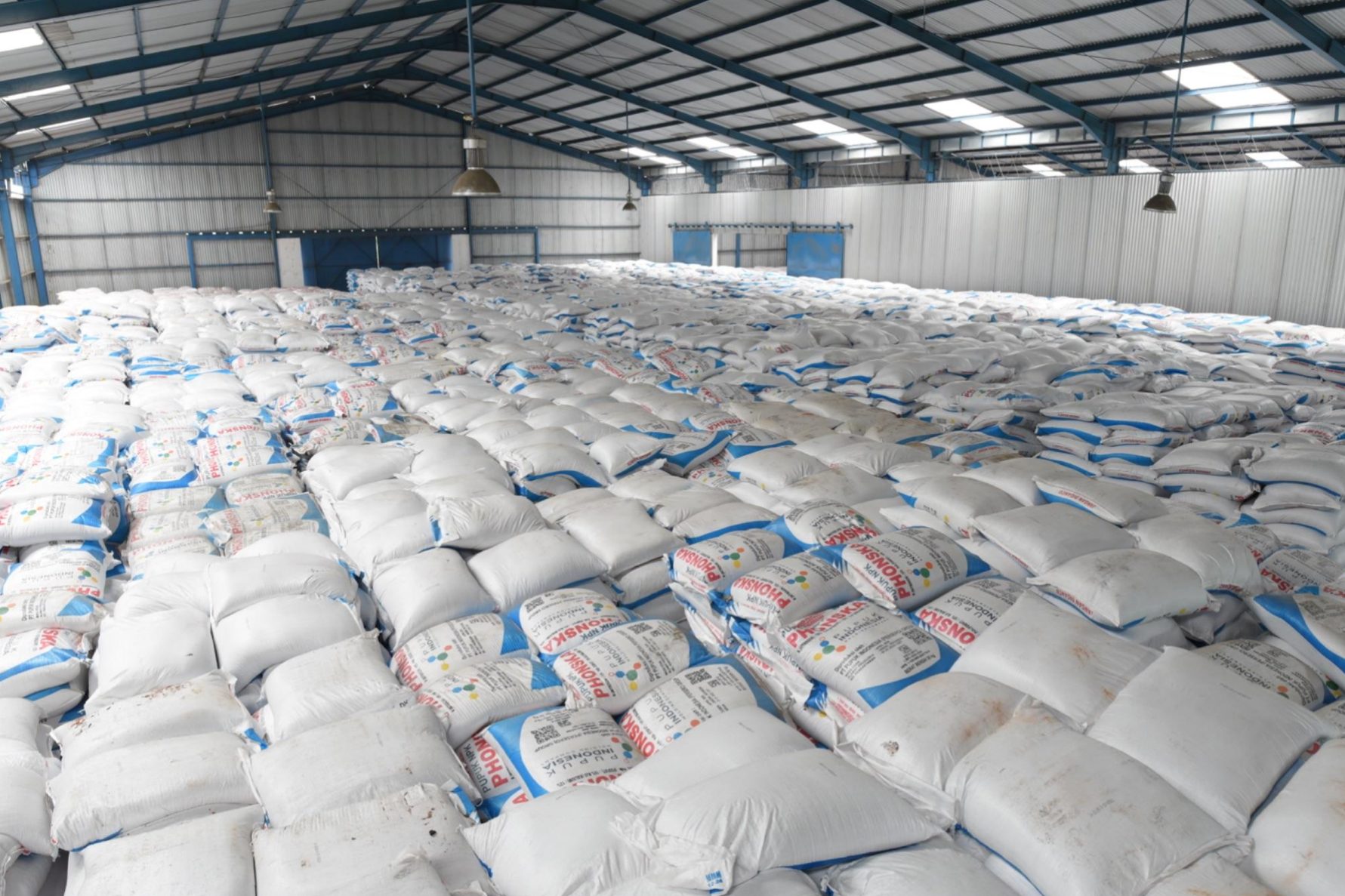
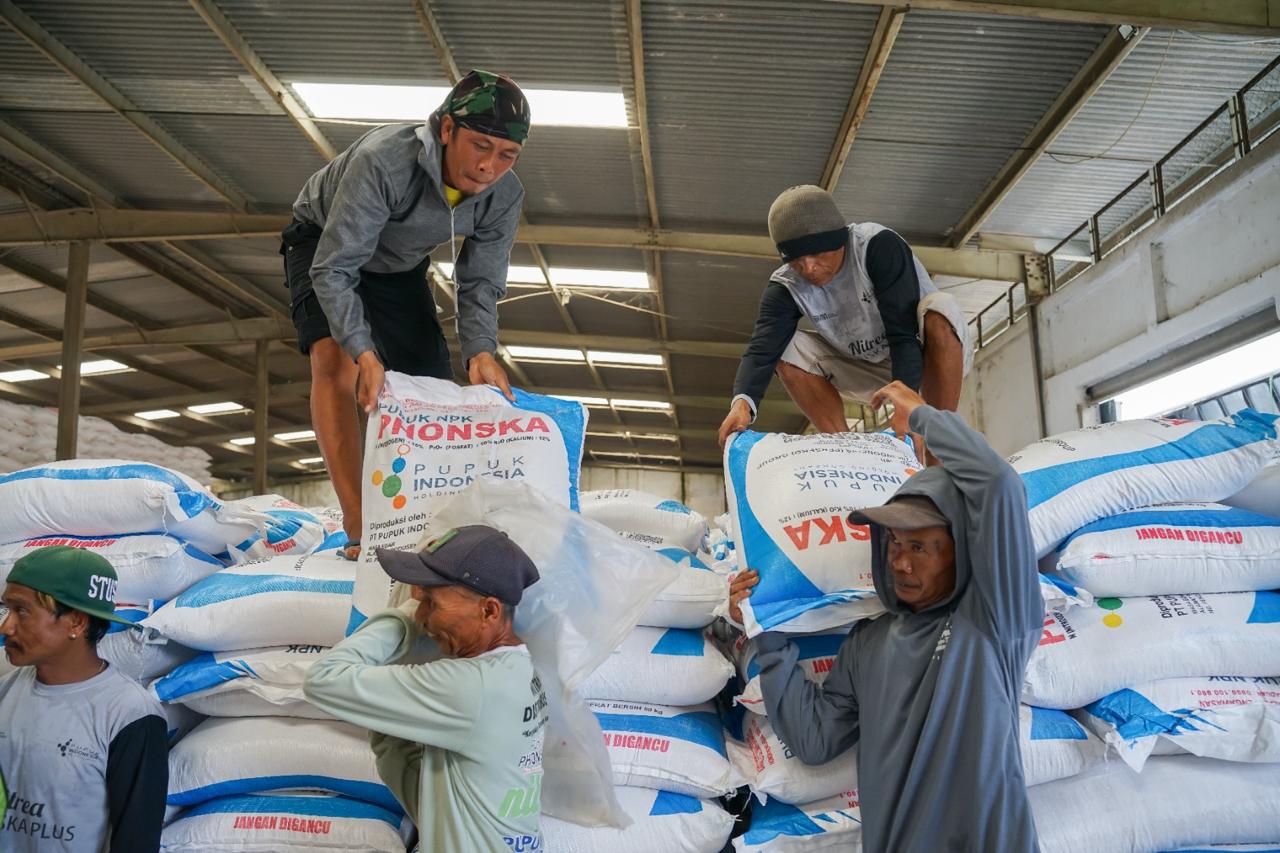
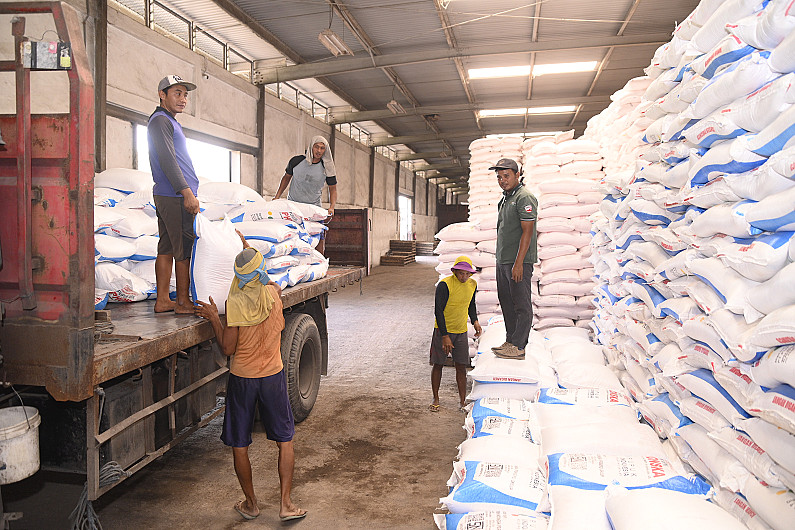
To ensure fertilizer distribution in East Java remains optimal, Pupuk Indonesia has prepared 142,711 tons of subsidized fertilizer stock. The latest stock consists of 113,239 tons of Urea, 21,026 tons of NPK Phonska, 129 tons of NPK Cocoa, 5,971 tons of organic fertilizer, 1,540 tons of ZA, and 806 tons of SP-36. These stock levels exceed the Government’s minimum requirement and are sufficient to meet farmers’ needs for the next three weeks.
In addition to ensuring adequate stock availability, Pupuk Indonesia continues to coordinate with the East Java Provincial Agriculture Office to monitor fertilizer distribution in each district. Areas with high fertilizer uptake will be prioritized for reallocation to ensure equitable distribution and that farmers’ needs are fully met.
“Pupuk Indonesia is currently coordinating with the East Java Agriculture Office to identify areas with high fertilizer uptake and those with lower absorption rates. Several regions will receive allocation adjustments to ensure that fertilizer supplies remain sufficient,” Eko said.
Furthermore, he urged farmers to redeem subsidized fertilizers only through Penerima Pupuk pada Titik Serah (PPTS) or authorized fertilizer kiosks. This appeal is intended to protect farmers from fraudulent schemes offering subsidized fertilizers through social media.
“There are many offers circulating on social media displaying photos of subsidized fertilizer warehouses while advertising fertilizers at low prices. I can assure you that these are scams. Subsidized fertilizers can only be redeemed by registered farmers through PPTS,” Eko emphasized.
Registered farmers eligible to receive subsidized fertilizers must be listed in the electronic Definitive Group Needs Plan (e-RDKK) and cultivate a maximum of two hectares of agricultural land. In addition, subsidized fertilizers are only allocated for ten designated commodities: rice, maize, soybean, chili, shallot, garlic, smallholder sugarcane, cocoa, coffee, and cassava.
Beginning in 2026, the Government has also allocated subsidized fertilizers to the fisheries sector. Eligible aquaculture commodities for hatchery operations include tiger shrimp, vannamei shrimp, milkfish, tilapia, common carp, gourami, catfish, and pangasius. Meanwhile, eligible grow-out commodities include tiger shrimp, vannamei shrimp, milkfish, saline tilapia, and catfish.
Similar to farmers, fish farmers eligible to receive subsidized fertilizers must be registered in the Electronic Fertilizer Subsidy Supply and Distribution Plan (e-RPSP). Grow-out operations are limited to a maximum of two hectares, while hatchery operations are limited to 0.75 hectares for freshwater aquaculture and 0.5 hectares for brackish water aquaculture.