National Farmers’ Day: Pupuk Indonesia Reaffirms Farmers as a Priority Through Affordable and Accessible Fertilizers
-
 Posted by User01
- Share


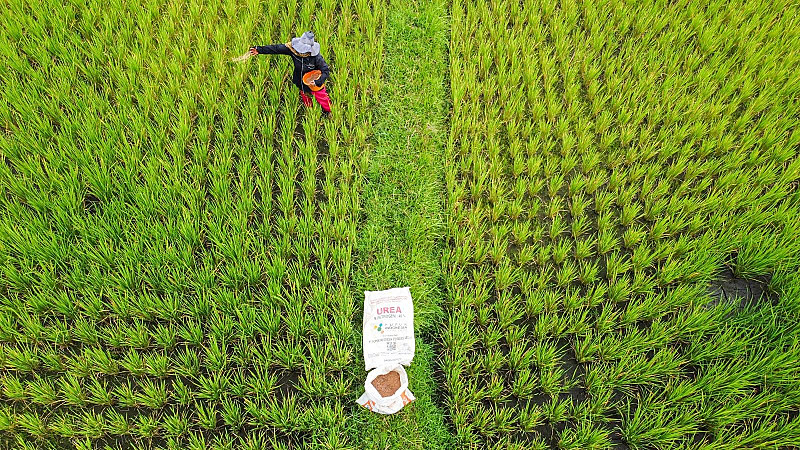
Jakarta, September 24, 2026 – In commemoration of 2026 National Farmers’ Day, PT Pupuk Indonesia (Persero) continues to strengthen its commitment to supporting farmers by ensuring fertilizer availability, simplifying fertilizer redemption, and making subsidized fertilizers more affordable. For the company, farmers are at the forefront of sustaining Indonesia’s agricultural sector and safeguarding national food security. Pupuk Indonesia therefore ensures that its ongoing transformation ultimately delivers tangible benefits directly to farmers.
President Director of Pupuk Indonesia, Rahmad Pribadi, said, “For Pupuk Indonesia, ensuring that fertilizers are available, easy to redeem, and affordable is part of our commitment to always stand alongside farmers. The various revitalization and transformation initiatives we undertake are not solely aimed at improving the company’s efficiency, but must also deliver tangible benefits to farmers in the field, including through more affordable fertilizer prices and easier access.”
This commitment is reflected, among others, in the 20 percent reduction in the Highest Retail Price (HET) of subsidized fertilizers, which has been in effect since October 2025. The HET reduction is supported by Pupuk Indonesia’s gradual plant revitalization program aimed at improving production efficiency. These upstream efficiency gains are subsequently translated into benefits for farmers through more affordable fertilizer prices.
For farmers, more affordable fertilizer prices provide greater flexibility in allocating farming costs more effectively. Toni Afandi of the Asahan Farmers Group in Sukatani Village, Cilamaya Wetan District, Karawang, West Java, said, “The reduction in subsidized fertilizer prices has been extremely helpful for farmers because it allows us to make significant savings. The money we save from the lower fertilizer prices can be allocated to other needs, such as pesticides. We can also see that the lower prices have encouraged other farmers to become even more enthusiastic about improving their farming activities.”
Similarly, Ma’ruf Arianto, Head of the Association of Farmers Groups (Gapoktan) in Trayu Village, Banyudono District, Boyolali Regency, Central Java, said, “Alhamdulillah, the reduction in subsidized fertilizer prices has brought a breath of fresh air to farmers and significantly reduced fertilization costs. This is the first time we have seen fertilizer prices come down. The lower prices have eased the burden on farmers, improved their welfare, and given them even greater motivation to fertilize their crops.”
In addition to affordability, Pupuk Indonesia continues to make fertilizers easier for farmers to obtain by simplifying the redemption process and strengthening its distribution system. Digital platforms such as i-Pubers and the Command Center enable the company to monitor fertilizer redemption and inventory levels in real time, down to the retail outlet level, allowing stocks to be managed according to the needs of each region. As of September 23, 2026, subsidized fertilizer redemption had reached 6.77 million tons, equivalent to 69 percent of the total 2026 allocation.
Farmers have also experienced the benefits of this simplified process firsthand. Doni, a farmer from Penawangan District, Grobogan Regency, Central Java, said, “Redeeming fertilizer through i-Pubers is much easier now. It is more accessible—all we need to bring is our ID card—and the process is much faster than before. Farmers feel more at ease and comfortable, without having to worry. For example, if we need additional fertilizer after flooding, we can simply go back to the retailer and get what we need. Farmers are happy because fertilizer is not only easier to obtain, but is now also more affordable. It deserves two thumbs up, not just one.”
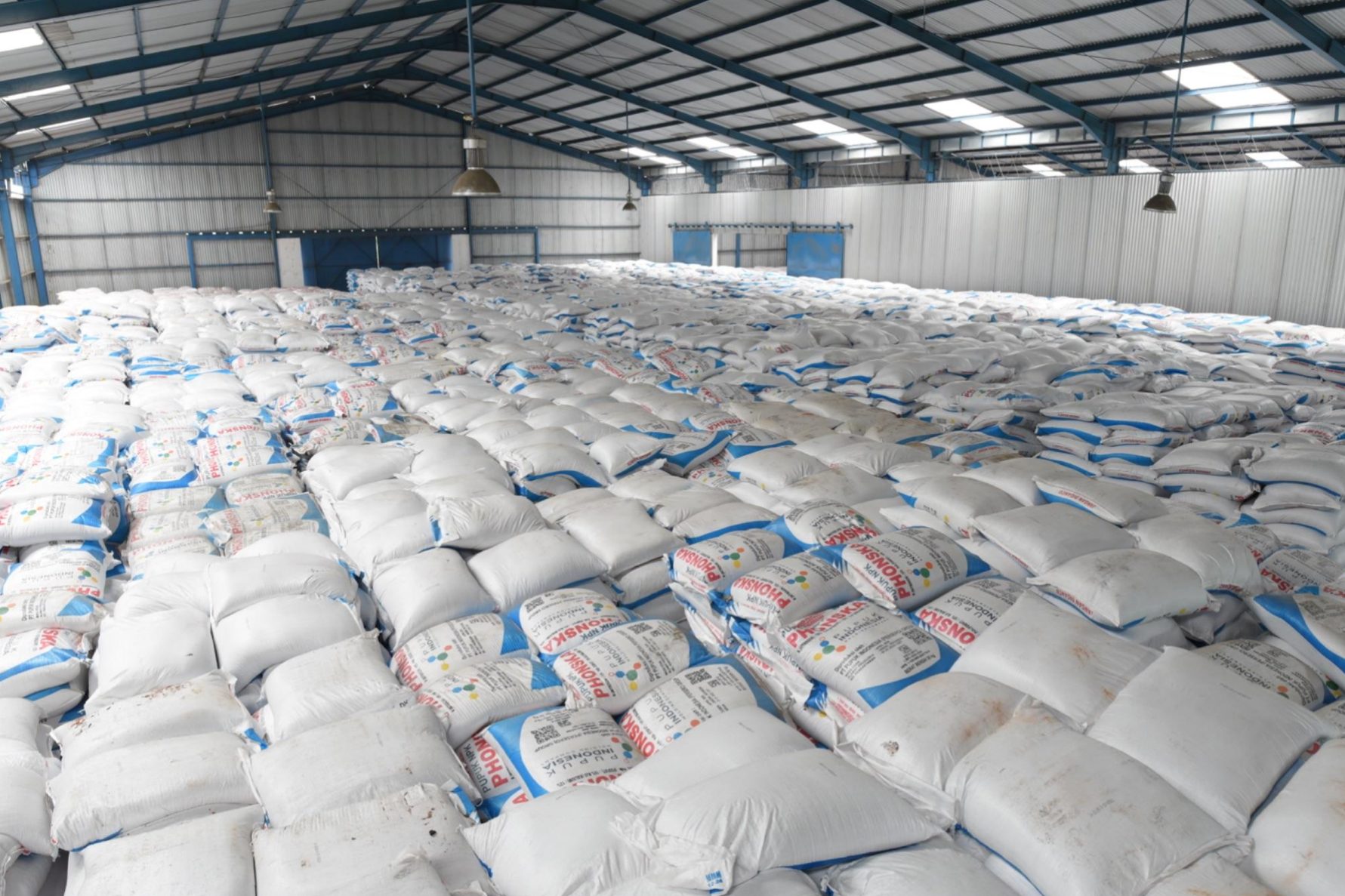
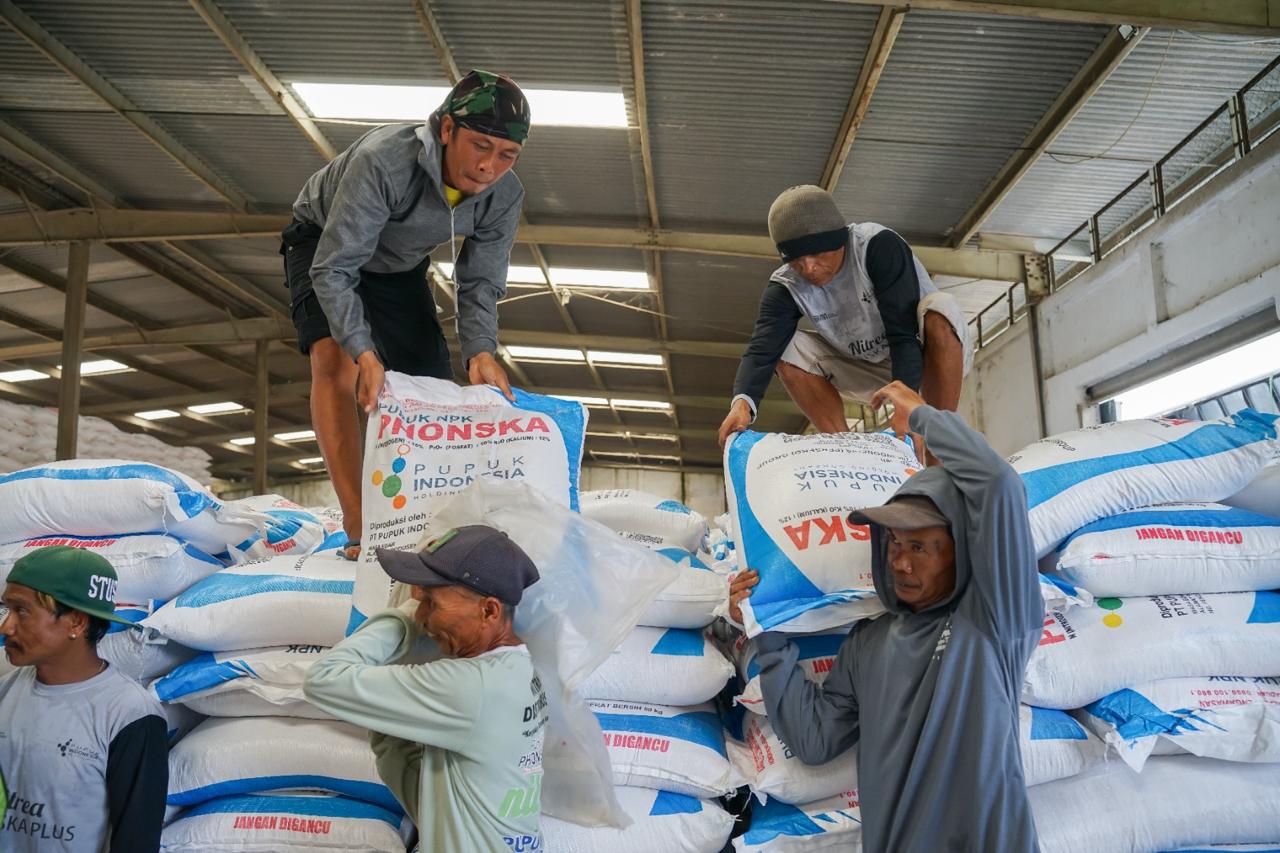
Easier access is also supported by adequate fertilizer availability across various regions. Pupuk Indonesia relies on an integrated logistics infrastructure encompassing ports, shipping fleets, and warehouse networks, enabling the company to reconfigure or reallocate stocks between regions according to demand. This helps maintain fertilizer availability at the farmer level, particularly during periods of increased demand.
In West Kalimantan, for example, Suhardi from Senakin Village, Sengah Temila District, Landak Regency, said farmers in the area have been able to consistently access fertilizer when needed. “Subsidized fertilizers are available at exactly the right time in our village. Two weeks after we plant our rice, the fertilizer is already available, so when we need it two weeks later, we can fertilize the rice we have planted. Redemption is also much easier because we can simply use our ID cards. We are grateful that the prices are also affordable for us in the village.”
Beyond ensuring that fertilizers are available and easily accessible, Pupuk Indonesia continues to strengthen the agricultural ecosystem to address farmers’ needs more comprehensively. Through the Agrosolution, Rembuk Tani (Farmers’ Dialogue), and TAJUMASE programs, the company provides assistance while expanding access to various forms of support, ranging from cultivation to financing. On the technology front, Pupuk Indonesia is developing Precision Farming and Mobile Soil Testing services to help farmers obtain fertilizer recommendations tailored to soil conditions and crop requirements.
These initiatives form part of Pupuk Indonesia’s efforts to build a stronger and more integrated agricultural ecosystem, ensuring that farmers benefit not only from easier access to fertilizers but also from broader support to improve farm productivity and welfare.
“National Farmers’ Day is an important moment to reaffirm that farmers are an integral part of Pupuk Indonesia’s journey. We will continue to strengthen fertilizer availability, distribution, and accessibility because when farmers receive the right support, they can perform their role at the forefront of national food security even more effectively,” Rahmad concluded.